- Welcome to the
hl-print
Your partner in large format and campaign production
For more than 40 years, hl-print has helped retail and business with large format printing, POS materials and campaign management for visible and consistent results
For us, a good solution is about technique, timing and co-operation. We advise you throughout the entire process - from idea, photo and file optimisation to printing, packaging and assembly - so your campaign stands strong and is delivered as it should be.
our solutions
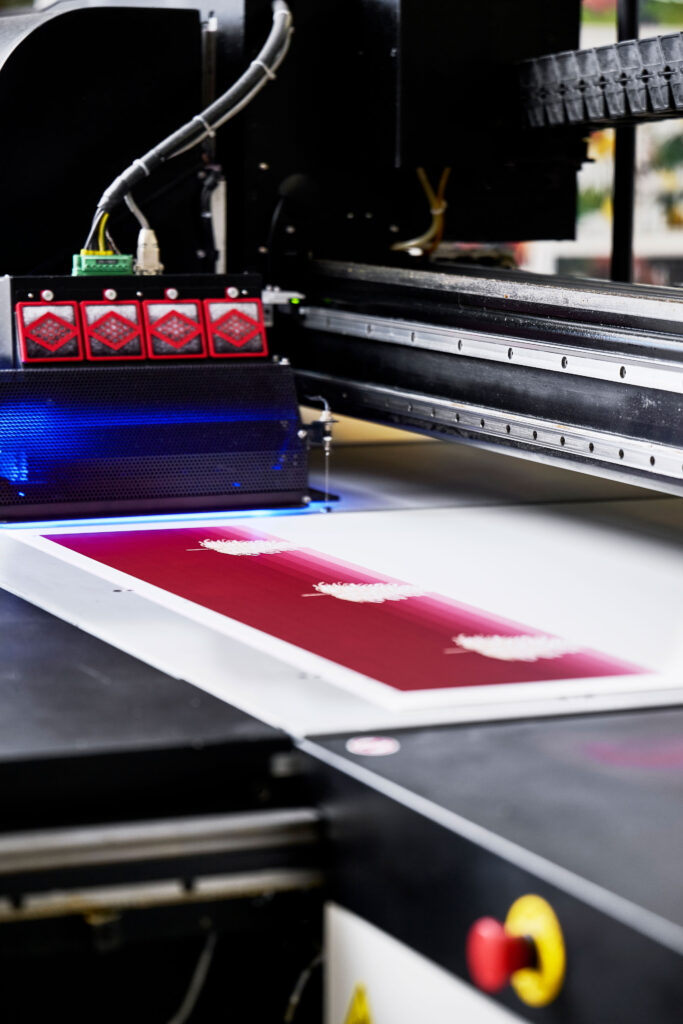
Large format printing
Up to 8 cm thick in a 2 metre x 3 metre format - it doesn't get much bigger than that.
Election posters
We deliver high-quality election posters and handle production from start to finish. They are printed directly on duct plastic for a sharp and durable result.
Campaign management
We plan and coordinate your campaigns, pack the materials as needed and deliver safely - even to multiple addresses.
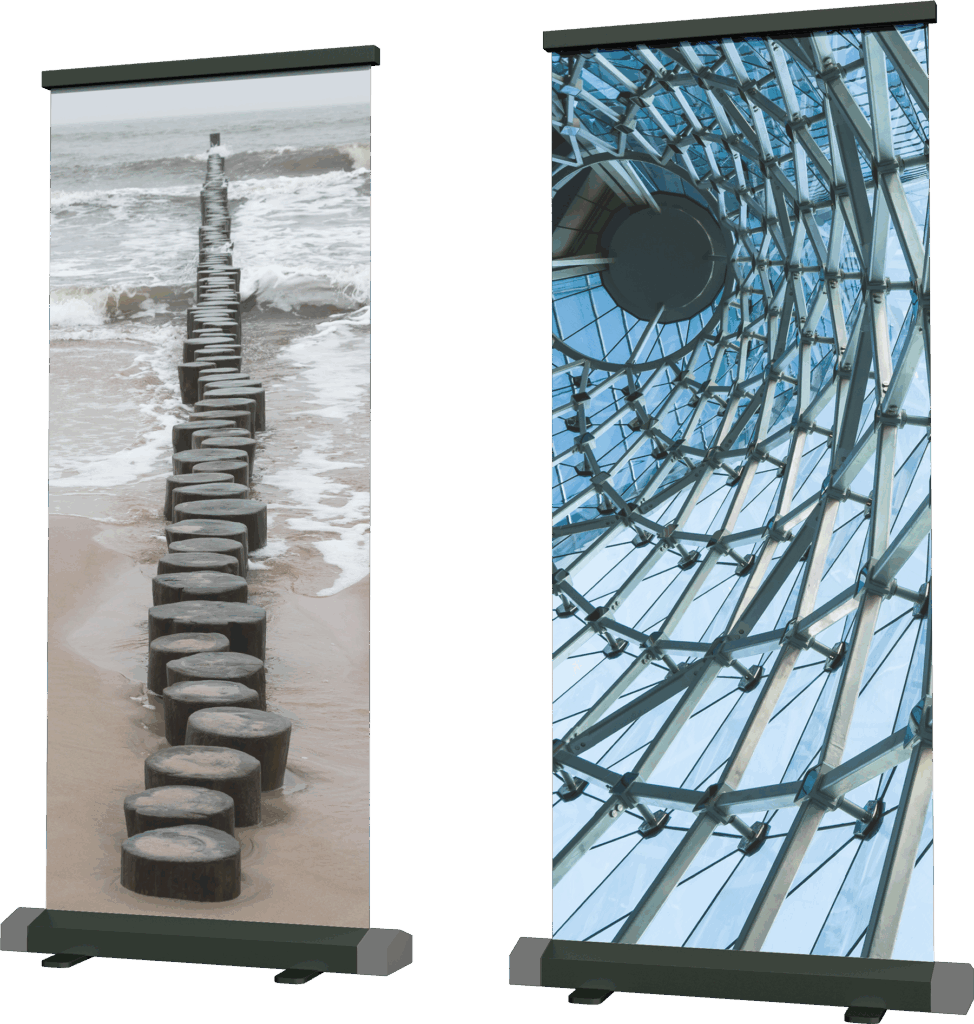
Roll-ups
The super quick and easy solution for any occasion where you want visibility. Available in multiple sizes and widths Contact us to find out more.
Elipses / pylons
Elipses / pylons (photo to come)
Floor adhesive
If you want to place adverts on the floor, there are several ways to do this - either on self-adhesive material or on a 2 mm floor mat.
Pane adhesive
All types of adhesives for shop windows both with and without laminate.
Signs
All kinds of signs on virtually any type of material, whether indoor or outdoor, cut at 90 degrees or contour cut.
Posters
Posters come in all sizes and several different types of materials - such as paper, iron paper or plastic depending on whether they are for indoor or outdoor use.
Craftsman signs
Aluminium signs to attach to iron stands for construction sites or for marking ‘For Sale’.
pos material
Anything that falls under POS material - besides those already listed, it could be A-signs, shelf markers, product dividers - in short, anything you can think of in this category.
Lightweight sheets
The well-known lightweight board - or re-board - is stable and environmentally friendly. Used for signage or construction, for example. Alternatives are also available here. Contact us to find out more.
Dream big - we make it easy
We work in a structured and solution-oriented way - from file reception and setup to printing, packaging and delivery - so that quality, colours and message are sharp all the way.
This is what a typical process looks like:
- Dialogue and needs assessment
We clarify the task with you and advise you on formats, materials, quantities and practical solutions to get the project off to the right start. - Preparation and printing
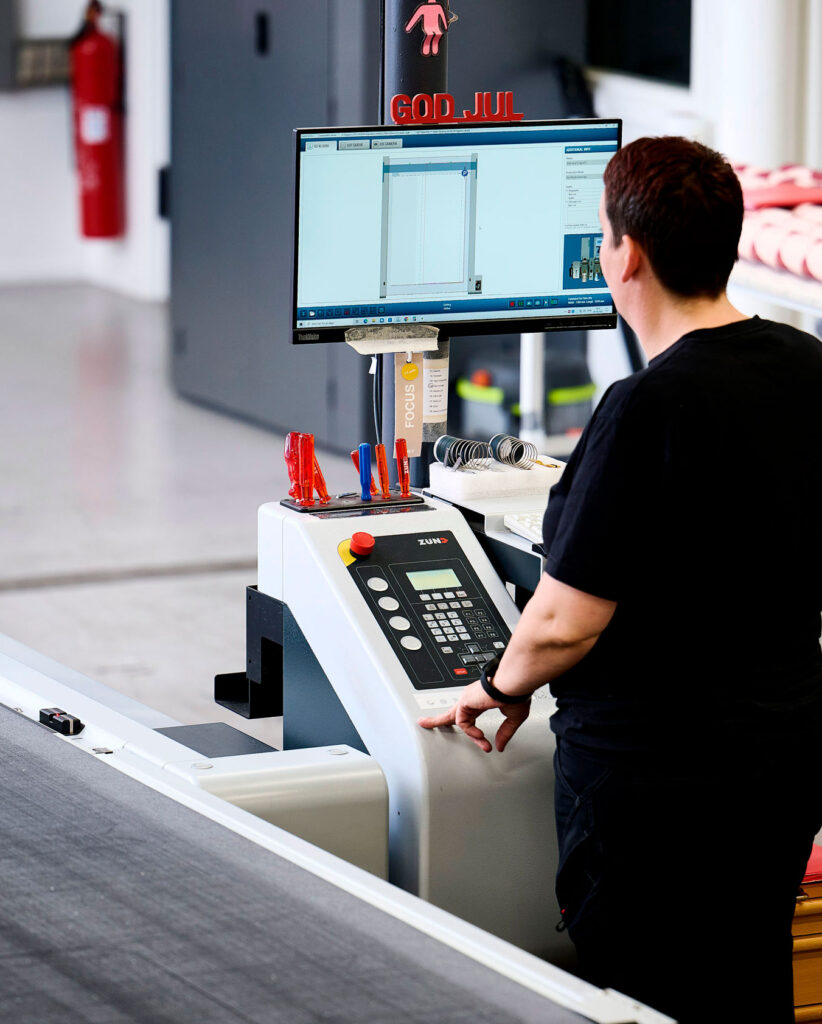
We ensure correct file optimisation and colour management to give the materials the look and quality you expect - both technically and visually. - Packing and delivery
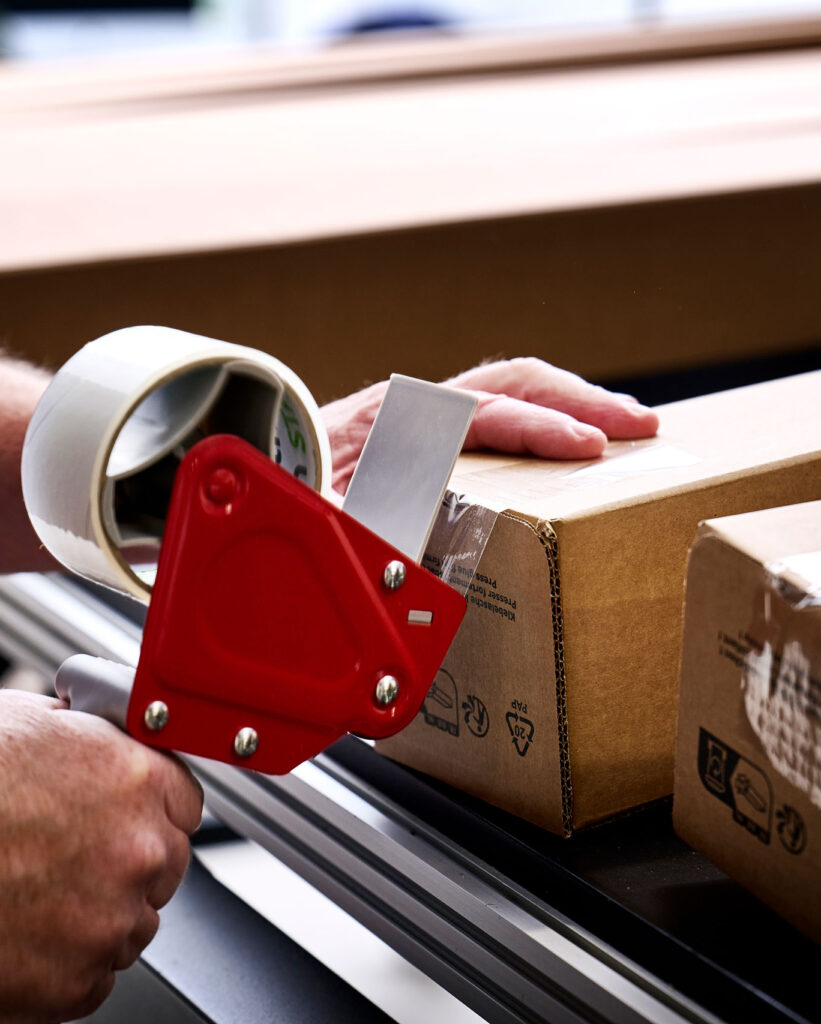
We pack the materials logically and securely and make sure everything is delivered as you need it - together, split or in multiple delivery points.
Do you need input on the technical details?
The link will take you to a mini guide with specifications for files, formats and colours.
Of course, you are also welcome to contact us for advice and guidance.
Campaigns/Campaign management
We help you plan, coordinate and execute campaigns on different materials. We ensure that your messages hit the mark - effectively, consistently and on time.
Large format printing
Signs, banners, roll-ups, floor foil, window decoration, soundproofing sheets and more.
Customisation and POS solutions
We customise solutions to your needs - both in format, print run and material selection.
Print & Mount
We handle the entire process - from file preparation to final set-up at your premises.
Promotional materials for store and events
Pylons, displays, shelf labels, boxes, streamers, posters and more.
Election posters
We are Denmark's largest supplier of election posters, so we can confidently say that we handle the entire process - from production to project management. Naturally, we print directly on duct plastic, which ensures the best quality and not least the best solution for the environment.
High quality election posters
We are one of Denmark's largest manufacturers of election posters, and we handle the entire process from start to finish. We help with planning, data management and project management, ensuring efficient production - whether the need is small or large, and even when the schedule is tight.
We print directly onto duct plastic for a sharp and durable result with high colour stability. The materials are weatherproof and come packaged and ready for installation.
Facts about
Election posters & climate
The climate impact of election posters is clearly and measurably documented.
But digital campaigns are not without costs either, especially when video consumption, algorithms and increased behaviour drive up the footprint.
Here's a brief overview of the difference between print and social media.
PRINT - the physical carbon footprint
Measurable CO₂ footprint
A poster printed directly on duct plastic emits 4.5 kg CO₂e.
500 posters give a total footprint of 2,250 kg CO₂e.
Material and production
Our duct plastic is produced in France with an energy profile that emits less CO₂e than the Danish average factor. Direct printing gives a crisp result without extra material layers.
Visibility without extra spend
Once the posters are produced, they require no subsequent energy to be seen.
SOME - the digital carbon footprint
Power line streaming
1 video second discharges 0.2 g CO₂e.
A 60-second video streamed 5,000 times emits 60 kg CO₂e.
Algorithms increase consumption
When content performs well, platforms push it out to more people - and both campaign producers and users create more activity, which increases data traffic.
Consumption in practice
60 kg CO₂e is equivalent to the production of approx. 13 posters.
print vs some:
Print and digital media have different carbon footprints.
Print has a clear, measurable footprint in production - while social media increases with streaming, interaction and algorithmic spread.
Do you produce 500 posters with a total footprint of 2,250 kg CO₂e, this would be equivalent to Approx. 37 stores,
if each post had a similar carbon footprint to the video.
Need help?
Do you have questions, need advice or want a quote? We are ready to help you. At hl-print, we combine technical precision with flexible solutions so you always get the best service.
Whether it's large format printing, graphic design, POS materials or campaign management, we are ready to find the solution that fits your needs.
Yes please, I would like to get in touch
Technical information:
Correct colours
CMYK colours used for printing. Most images from the photographer or from the web are in RGB.
The reason we recommend changing your print files from RGB to CMYK is to be able to best control and see the colours on the screen that will appear on the print.
However, please note that this may vary. The images we receive in RGB will be converted according to ISO Standard 12647-2.
Pantone colours the printer will simulate to reproduce it in the best possible way using CMYK colours.
Variety Text or line drawings etc. should only be made in 100% black, whereas black cover surfaces get the best results if you choose C=60 M=40 Y=40 K=100.
File types
PDF is the file format we really want to receive.
The reason for this is that when you save a PDF file to your computer, you create a small package with all the components that have been used in the design process.
This means that all the colours, fonts, font sizes, line spacing and all the other settings are saved in the PDF - and when you send it to us, we have that information too!
This also explains the name of the PDF: Portable Document Format.
Fonts and colours must be embedded in the PDF. This way it causes fewer problems down the road as we avoid having to track down something that didn't make it into the shipment.
Pruning and punching
3 mm Cropping is always important when creating files for print.
The punch moulds should lie in a spot colour, which are named “punch” or “cutter”. The same goes for buck strokes, which are named “buck”.
White surfaces or lacquer are also made in spot colours and are named “white” or “lacquer”.
Important! Remember the above spot colours for “overprint” - that way the lines will not appear on the print itself.
Dissolution
DPI stands for dots per inch. This means that the more dots per inch there are in an image, the more detailed it will be. We always recommend 300 dpi for best results.
However, it also depends on the material to be printed on and what it will be used for.
For example, images on banners or prints that need to be viewed from a distance can be fine with a resolution of 100-150 dpi.
- Competences
3 of the rest of us...

- Job
Become part of the HL family
Do you want to be part of our ‘family’?
We are always looking for talented people who want to make a difference for our customers and our industry.
We'd love to hear from you.